The Corlay Maquis
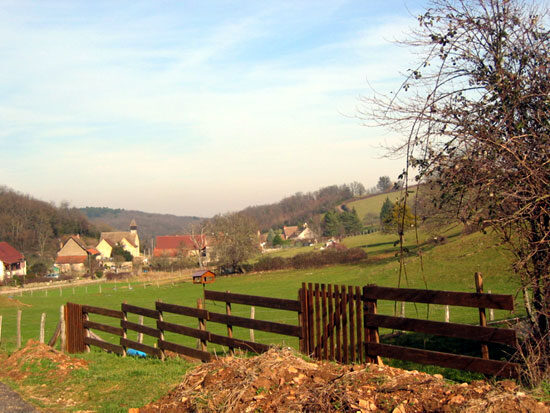
A secluded valley in the hills of the Chalonnais that became one of the main maquis of Saône-et-Loire.
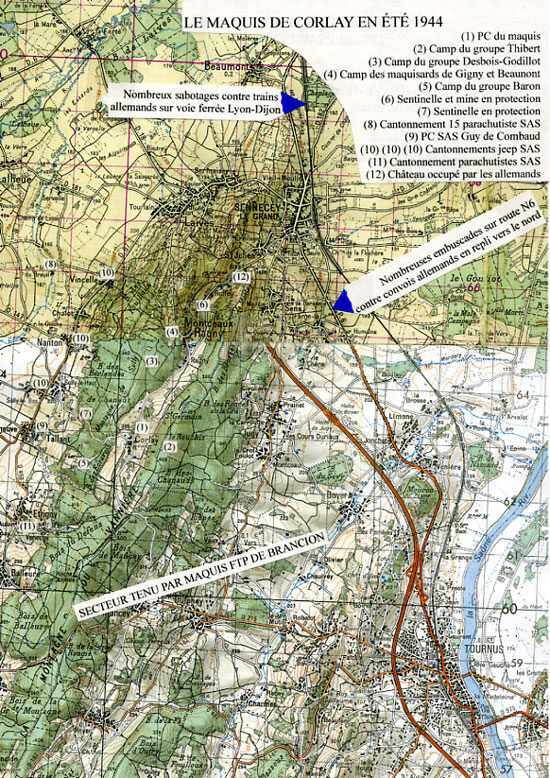
The Corlay Maquis was set up on 10 June 1944 by the "Thibert group", following the news of the Normandy landings. The aim was to find a better refuge and greater scope for action than that offered by the La Ferté forest and the villages of the Grosne plain that had until then sheltered the resisters.
From the wooded hills surrounding Corlay, the resisters could watch over the surrounding plains and valleys. Targets for sabotage and raids were close at hand: the Chalon–Mâcon railway, the N6 main road, river traffic on the Saône, electrical and telephone lines — all infrastructure vital to the German armies retreating towards Alsace.
Moreover, the Corlay valley, isolated and very rarely visited by the enemy, sheltered several small farms favourable to the Resistance and able to supply the men. Other groups came to swell this maquis — Gaudillot, Baron, Gigny, Beaumont — each setting up camp on the hills around Corlay. Through the Navois pass, the Corlay Maquis was in contact with the F.T.P. maquis based at Mancey and Brancion.
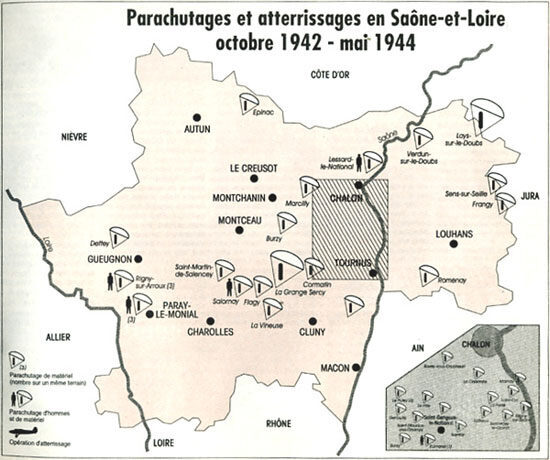
André Jarrot ("Goujon"), parachuted in from London, took command of the whole from 7 July. British and French parachutists of the Special Air Service provided military training for the young recruits. A large quantity of weapons was delivered by parachute. In late August 1944 this maquis received the reinforcement of Guy de Combaud's SAS jeep detachment.
It was from Corlay that, on 4 September 1944, the battle of Sennecey-le-Grand was launched, which liberated that town but at the cost of heavy losses on both sides.
- The Corlay Maquis numbered up to 525 men.
- It carried out a great many acts of sabotage and ambushes.
- It received numerous parachute drops.
- 49 of its members died in combat or in deportation.
The places of remembrance of this maquis are the war memorials of Sennecey, Laives and Ruffey, as well as the Corlay chapel.
Source: Le Maquis de Corlay, André MONTARON, Éditions Hérode.